The Discipline of Magic
To the residents of the National Hotel, he was simply "Santa." This was not a nickname; it was a total identity. As the flagship Santa Claus for Macy’s San Francisco for nearly two decades, he treated the role not as a seasonal job, but as a sacred discipline.
Each year, he would intentionally gain between fifty and eighty pounds before arriving in August, ensuring his body physically matched the myth. He lived in a state of perpetual magic. Even within the chaotic corridors of a budget SRO on Market Street, he refused to break character. He signed hotel registries, employment forms, and legal documents as "Kris Kringle."
His reasoning was protective: he was terrified that a child might be wandering the halls, overhear his legal name, and have the magic of Christmas shattered in an instant. To him, preserving that illusion was worth the erasure of his own identity.
"As old as my tongue and slightly older than my teeth."
— His official response to questions of age.

The Social Physics of the National
The National Hotel was a "hotel of last resort" located in the Mid-Market dead zone. It was a place of rough conditions: unreliable systems, pervasive bed bugs, and a broken elevator that effectively turned the building into a walk-up. Yet, Santa chose to live here out of preference, finding it "real" and loving the noise.
The building operated on a unique set of "social physics," where the line between reality and dark fiction was thin. It was a place where a doorman named Sherman Cruzenberry could be rumored to be a fugitive yacht captain, and where the flagship Macy’s Santa could live next door to a lamp thief.
The architecture enforced a strange intimacy. Neighbors existed in each other's sightlines through air shaft windows. This lack of privacy fostered a philosophy of "respect over pity." When Sage watched a neighbor reach through a window to steal a blue desk lamp, per said nothing. The community understood that if the neighbor needed the lamp that badly, the theft was a necessity, not an insult.

The Encounter
The friendship began in a moment of pure, drug-induced surrealism. Sage and pers boyfriend Steven were in their room on LSD when a thunderous knock rattled the door. It was followed by a baritone bellow that seemed too perfect to be real:
"HO HO HO, LITTLE BOYS, DO YOU WANT TO GET SOME SUSHI?"
Sage slammed the door, convinced the voice was a hallucination. Later, upon realizing the man was real, Sage apologized. Santa waved it off with a laugh, revealing his counter-culture roots: "I learned how to play the sitar from Wavy Gravy. You should have just said you were tripping."
A Pocket of Dignity
Inside the squalor, Santa created a sovereign state of high culture. Because the radiators were unpredictable, his room was a "sauna"—perpetually heated to 90 degrees. He and his neighbors would sit, often stripped down to their underwear to escape the heat, watching the Jerry Lewis Telethon.
Despite the setting, he refused to lower his standards. He filled that sweltering room with "complicated foods," real Cuban cigars, mid-range Cognac, and high-end chocolates. He was a man who understood that dignity is a choice you make every day, regardless of your address.
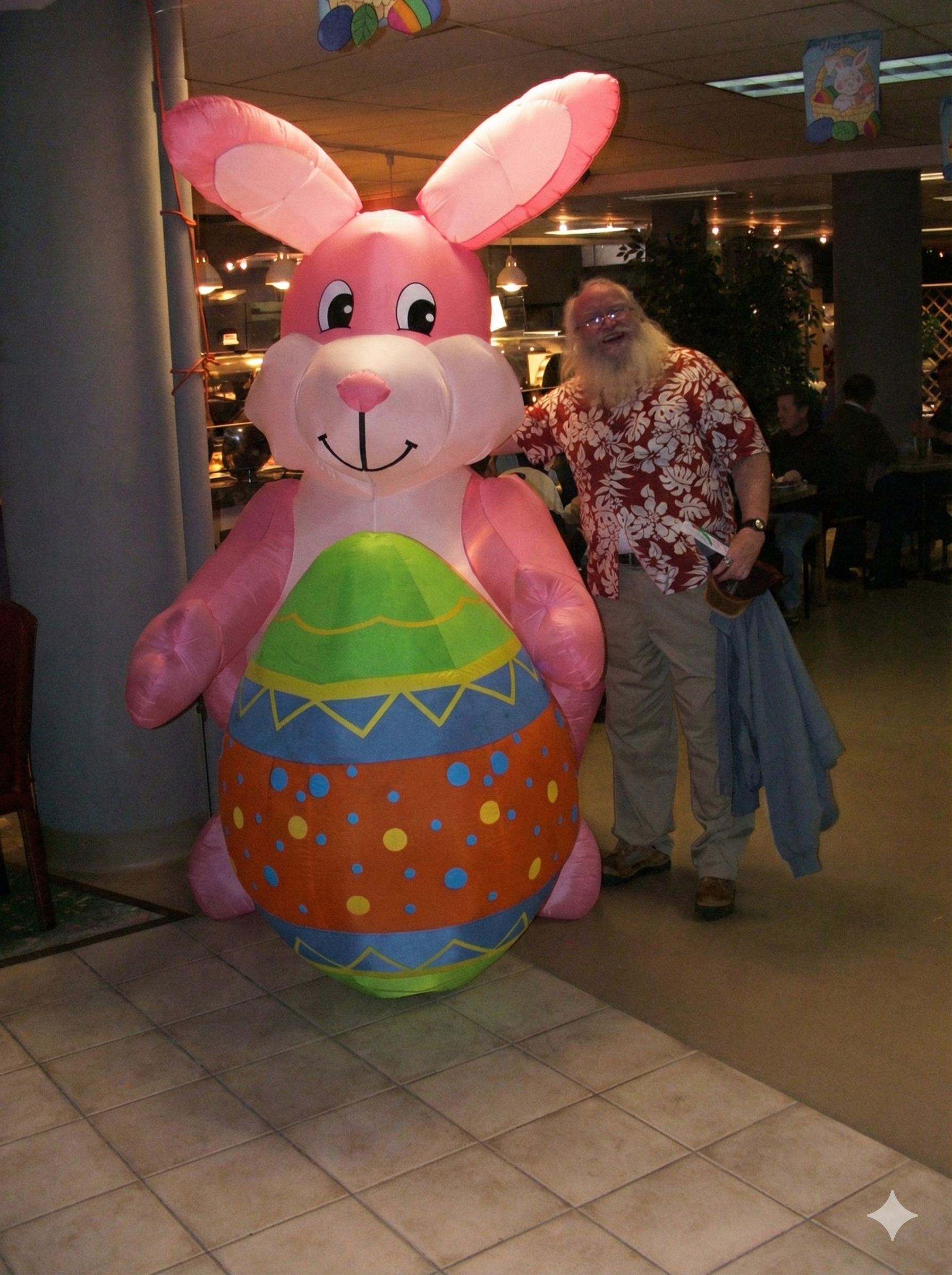
When Holidays Collide in San Francisco
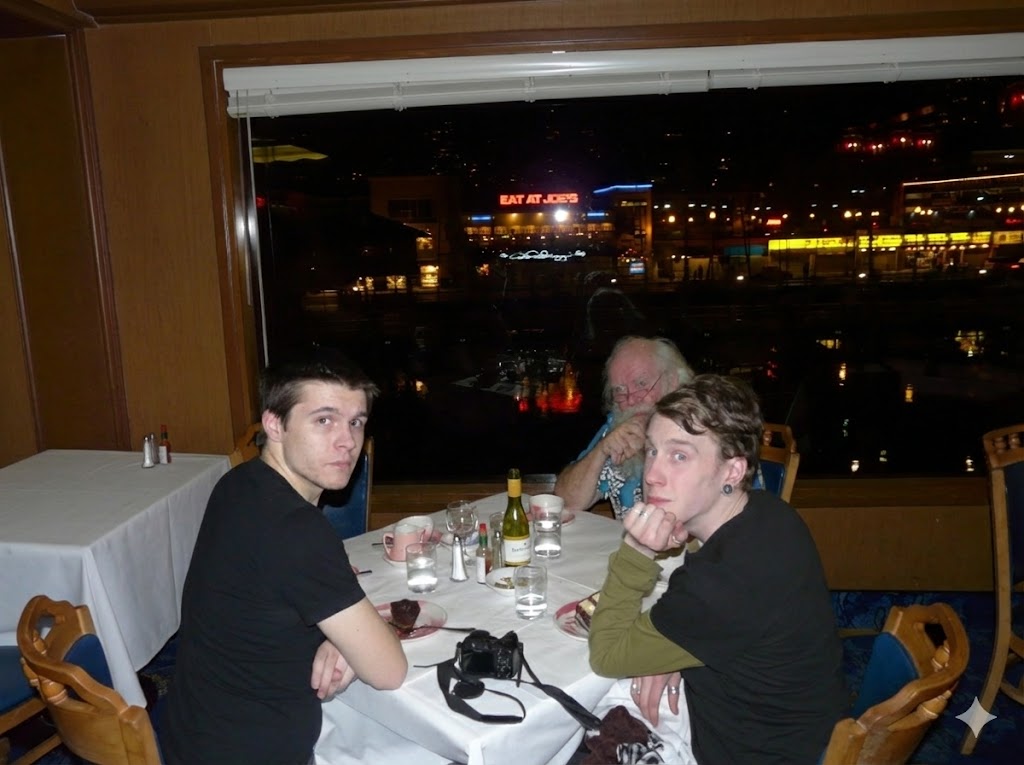
The Fog Harbor Ritual
The "Fattening Up" Ritual
Every August, Kris returned to San Francisco from Oregon to begin a physical transformation. The Macy's contract required "jolly" proportions, so he committed to intentionally gaining between fifty and eighty pounds every autumn.
But Kris Kringle hated dining alone. Because the hotel had no kitchen, and because he was a gourmand who loved to share, he transformed this professional obligation into an act of community.
He would take his neighbors—often starving artists or impoverished residents—to expensive tourist traps like Fog Harbor on Pier 39. He possessed a rare gift for generosity: he could pay for massive seafood towers and steaks without ever making his guests feel the "debt" of the meal.
The Man Beneath the Suit
The era ended in 2010. Sage and Steven walked him to the Amtrak station for his return to Oregon. Respecting the "Santa Mode" boundary to the very end, Sage never asked for his legal name. Per only discovered it was John Toomey by secretly glancing at a luggage tag as he walked away toward the train.
Tragedy followed; his home in Oregon burned down, and his health failed. But he did not die a stranger in a strange land. In 2011, he returned to the National Hotel one last time. He died in his room, surrounded by the community he had fed, witnessed, and loved.
"The nicest man I ever met."
— A Neighbor's Eulogy